

7 Ways to Organize a Commercial Cooler for Drinks (2026)
That can in the back of the cooler expired three months ago. Restocking is a chaotic game of Tetris that ends with lost product, wasted money, and slow service. A system isn't a luxury; it's the difference between profit and loss.
Why Most Drink Fridges Become a Mess
The core problem is random loading. New drinks get shoved wherever they fit, pushing older ones to the back where they're forgotten. Without a firm stock rotation habit, this guarantees waste. Most households toss at least one or two expired drinks a month; in a commercial setting, that number multiplies into significant financial loss.
A disorganized cooler doesn't just cost you in expired product. It costs you in service time, as staff hunt for specific items during a rush. Mixing drink types on the same shelf makes visual inventory impossible and restocking a time-consuming chore.
7 Ways to Organize Your Commercial Cooler for Drinks
1. Use FIFO — Load New Behind, Grab Old First [Editor's Choice]
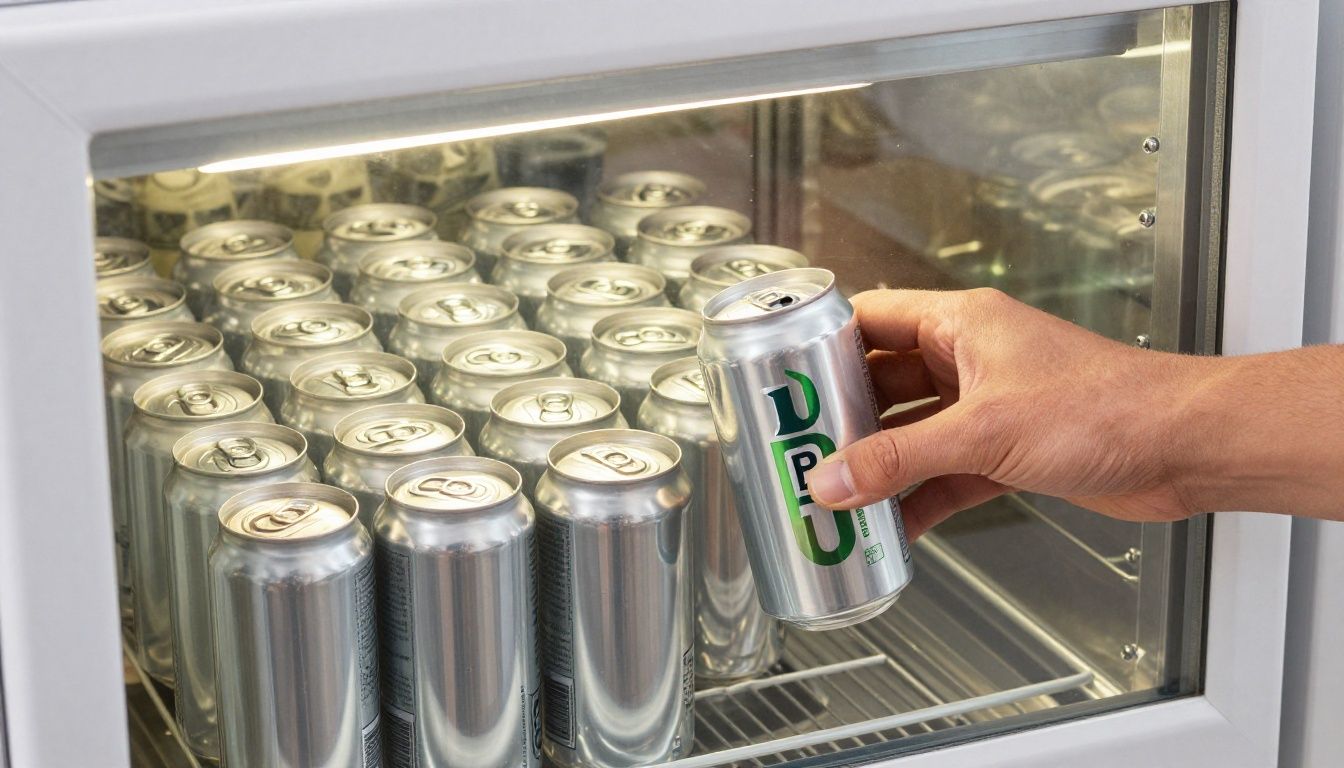
First In, First Out is the only principle that guarantees you sell your oldest stock first. Expired cans are almost always the ones that were pushed to the back during a hasty restock. To implement this manually, you must (1) pull all existing inventory forward, (2) load new cans or bottles behind the old stock, and (3) always serve from the front. The best tool for this is one that automates the process entirely. The U-Beverage Tray is the only organizer with a patented U-shaped track that automatically rotates stock for you; load from one side, and the oldest drink is always first on the other. This Michigan-made system is built for heavy commercial use.
This system is not for shelves less than 14 inches deep and works best with standard 12oz cans.
2. Zone Shelves by Drink Type
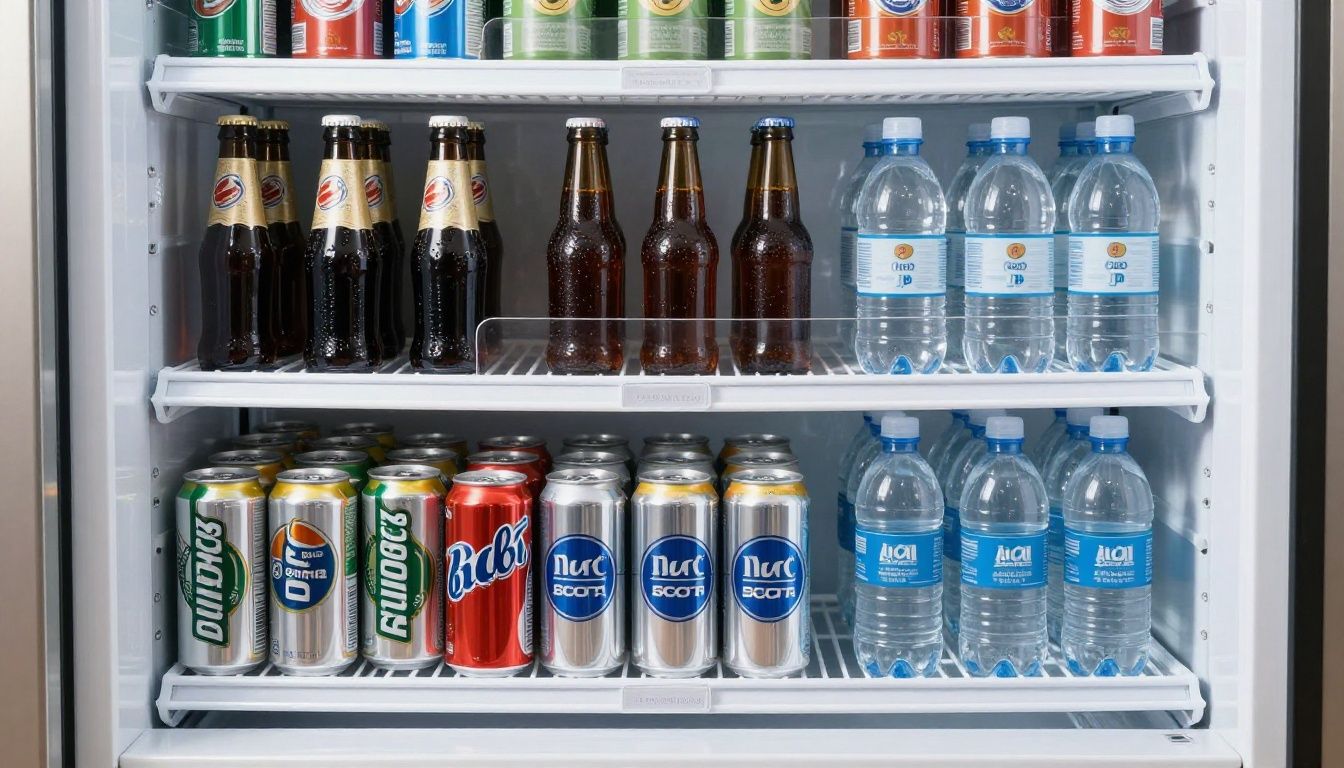
Assigning one shelf per category eliminates the time-wasting “dig and search” routine. It makes finding items and taking inventory faster. To implement, (1) audit all the drink types you carry, (2) assign a fixed shelf or section for each category (e.g., domestic beer, craft IPA, energy drinks), and (3) label the shelf edge if multiple people are restocking. The right tools are simple shelf bins or adhesive labels.
This tip is not ideal for small operations with only one or two drink types; simply front-load your main product. For everyone else, it's a foundational step for faster service.
3. Put Most-Used Drinks at Eye Level
Place your most frequently sold items where they are easiest to grab. Drinks on the bottom shelf or tucked in a corner get ignored, leading to slower sales and potential expiry. To fix this, (1) identify your top 3-5 best-selling drinks, (2) move them to the primary waist-to-eye-level shelf, and (3) relegate specialty or slow-moving drinks to the bottom or top shelves. No special tools are needed for this, just smart planning.
This strategy is less critical for small, two-shelf under-counter coolers where everything is already within easy reach. For walk-ins and larger coolers, it's essential for an efficient FIFO system.
4. Group Same Drink Types Together
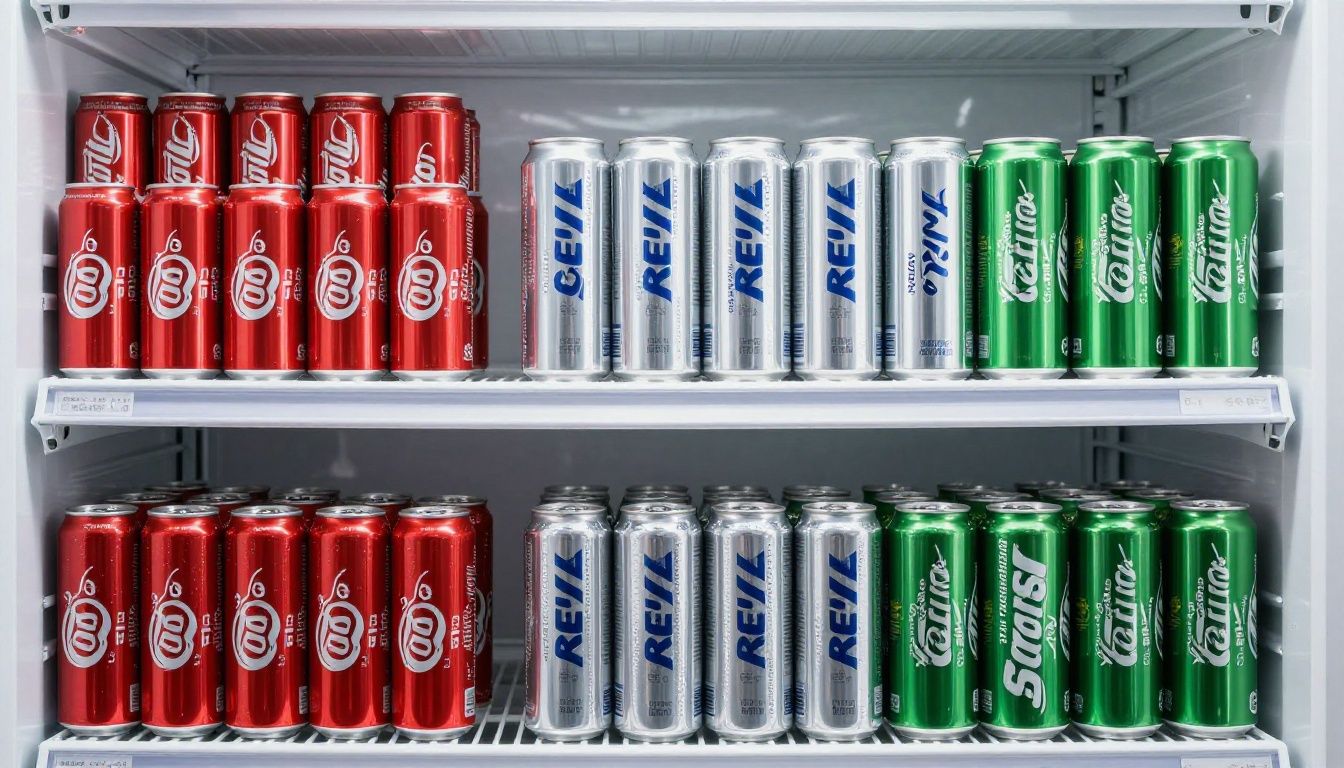
Group identical SKUs into clean, distinct blocks on the shelf. A jumbled mix of different cans looks unprofessional and makes it impossible to know what you have at a glance. To organize, (1) pull everything off a single shelf, (2) sort the items by exact type (e.g., Diet Coke, Coke Zero, Classic Coke are three different groups), and (3) reload them in neat, front-facing blocks. You can use simple plastic dividers, but disciplined placement is often enough.
This is less of a concern for a personal home fridge, but for a business, it's non-negotiable for inventory management.
5. Reserve the Door for Low-Priority Drinks
The cooler door is the warmest and most temperature-unstable zone. Every time the door opens, its temperature can swing 5–8°F warmer than the main compartment, which degrades carbonation and can spoil sensitive products like beer. To fix this, (1) remove all carbonated and perishable drinks from the door, and (2) use the door shelves for items like bottled water, juices, or syrups. The standard door bins are the only tool required.
This advice is not for mini-fridges that lack door shelving. For all others, it's a key part of preventing food waste.
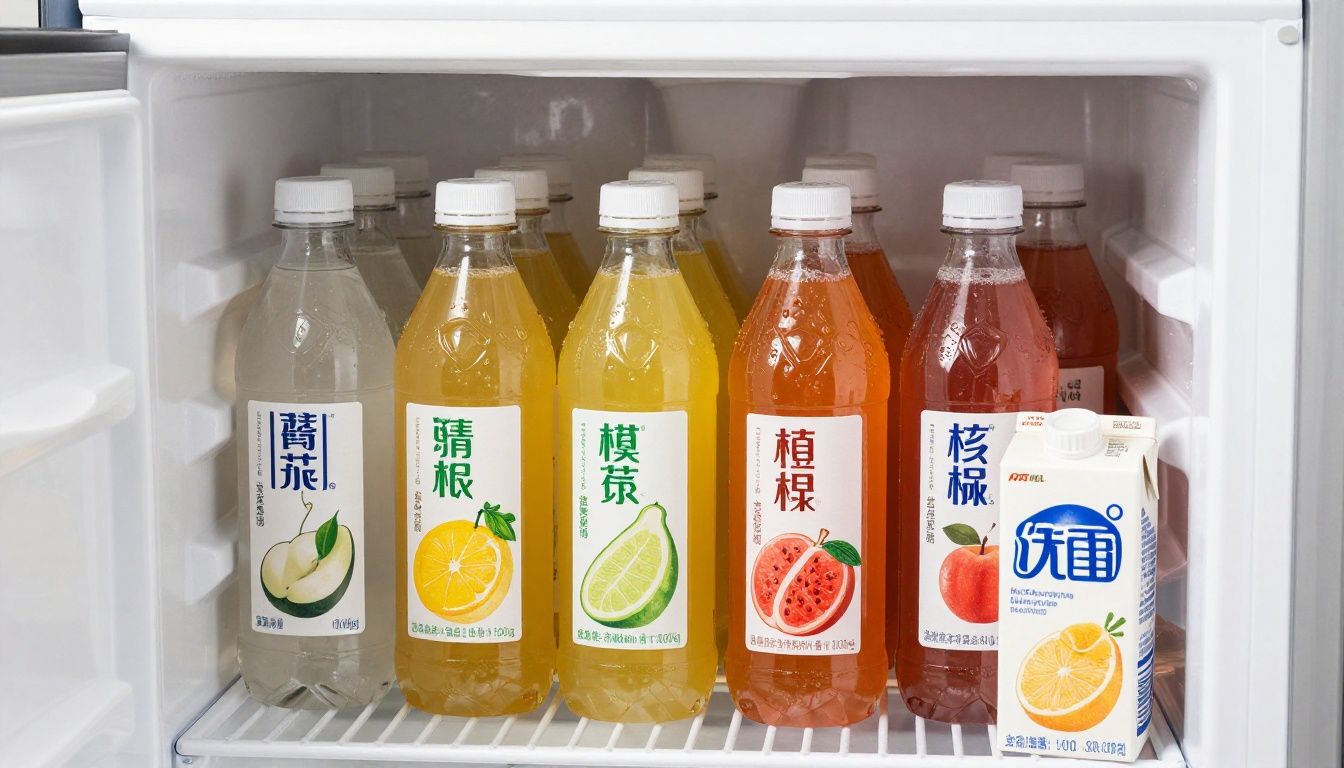
6. Use Bins to Contain Loose Bottles
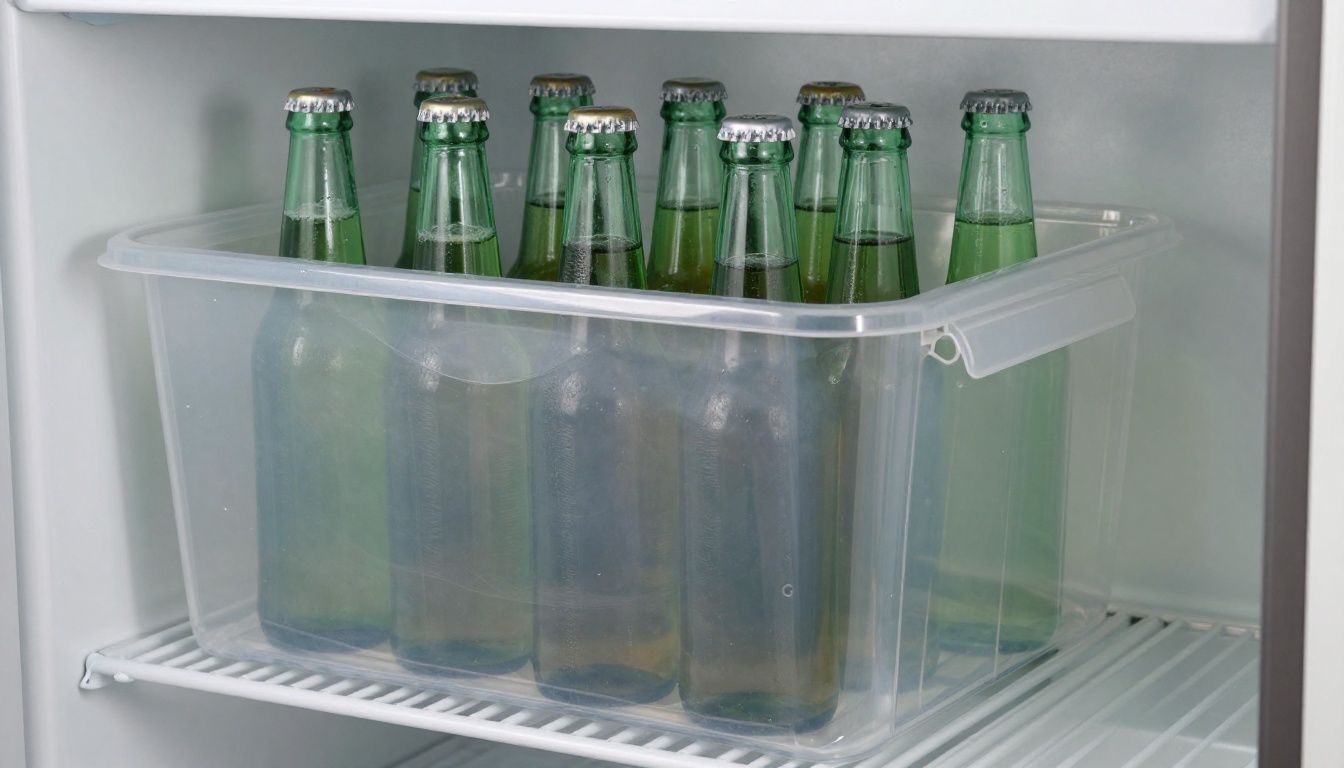
Loose bottles are a menace; they roll, tip over, and block access to everything behind them. One tipped bottle can force you to pull half the shelf out just to reach an item. To solve this, (1) choose a bin that matches your shelf depth, (2) place bottles inside with necks facing the same direction, and (3) leave a one-bottle gap for an easy grab. Clear acrylic or wire bins work best. For cans, a tracked system like the U-Beverage Tray™ Long is superior, as it keeps every can in a dedicated channel, eliminating tipping entirely.
This tip is not for those with extremely limited overhead space, as bins typically require an extra inch or two of clearance. Check out a real comparison of organizers to see what fits your space.
7. Do a Weekly 2-Minute Reset
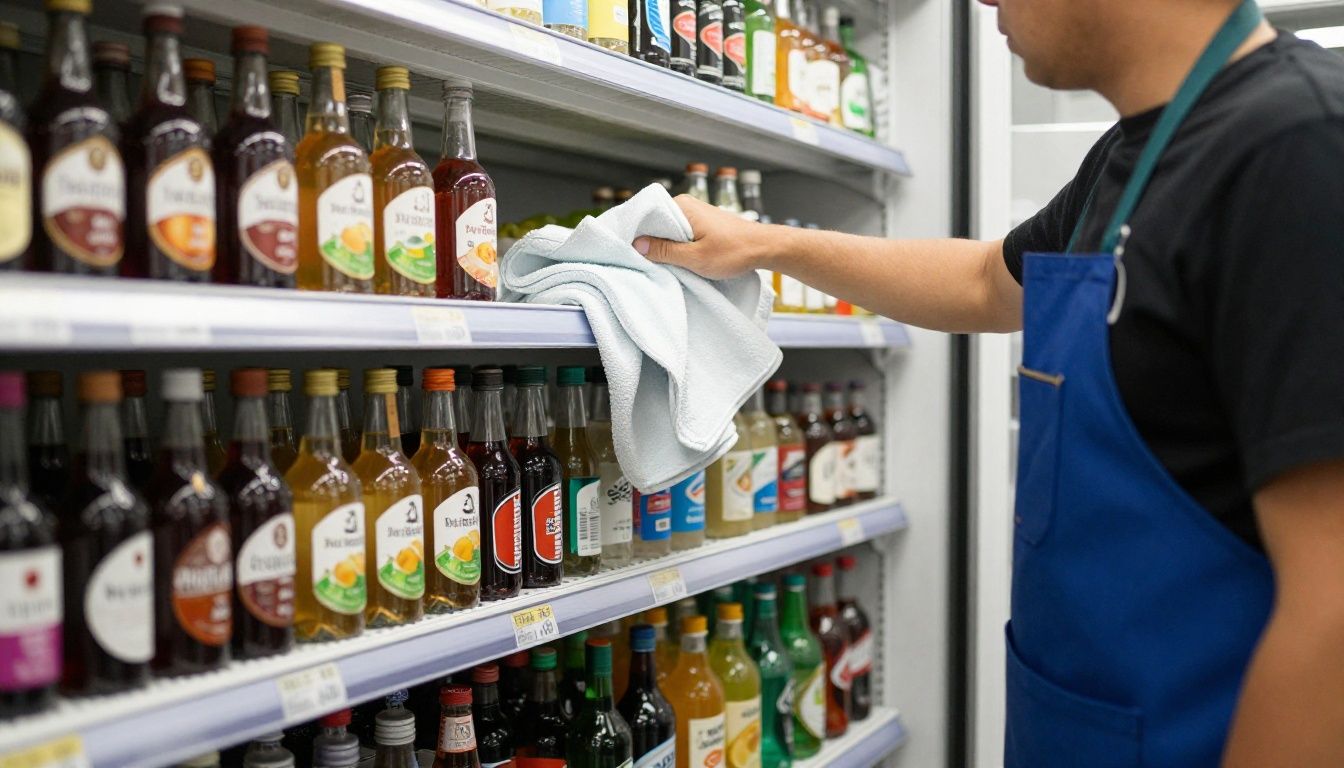
Consistent maintenance is a weekly habit, not a monthly project. A system that isn't maintained will collapse within weeks, leading to the same disorganization and waste you started with. To stay on track, (1) on your main restock day, take two minutes to pull everything forward, (2) spot-check expiration dates on the items in the very back, and (3) wipe down the shelf. No tools are needed, just discipline.
This is not for high-volume commercial operators; for bars and restaurants, this check and rotation log should be a daily, per-shift task to maintain standards. It's a core part of solving the cooler problem.
Common Mistakes That Undo Your System
Dumping a new case of drinks in the front of the cooler is the cardinal sin of stock rotation. It guarantees the drinks behind it will expire. You must load new stock from the back.
Ignoring expiration dates until it's too late is another common failure. A quick spot-check during restocking takes seconds and saves dollars. Don't wait until you find a spoiled product by accident.
Finally, avoid organizing by color or size. It might look nice for a moment, but it's useless for service. Always organize by specific product type (SKU) for fast access and accurate inventory.
FAQ
Does FIFO really matter in a home fridge?
Yes, especially if you buy in bulk. Loading a new 12-pack in front of an existing one means the back pack will sit for weeks, often going flat or past its best-by date. Always load new behind old, even at home. It's the system that ends expired food.
How many organizers do I actually need?
Less is more. Start with one automatic FIFO tray for your primary canned beverage and one bin for each type of loose bottle you carry. A standard fridge with more than four organizers is usually wasting space and impeding airflow. A single Short U-Beverage Tray can often handle all your can needs.
What's the best way to organize drinks in a commercial cooler?
Mandatory FIFO rotation is the top priority for both profit and health code compliance. Organize shelves by brand and SKU, placing best-sellers at eye level. For under-bar coolers, a purpose-built organizer like the U-Beverage Tray is essential to maintain speed and prevent the hidden costs of disorganization.
